
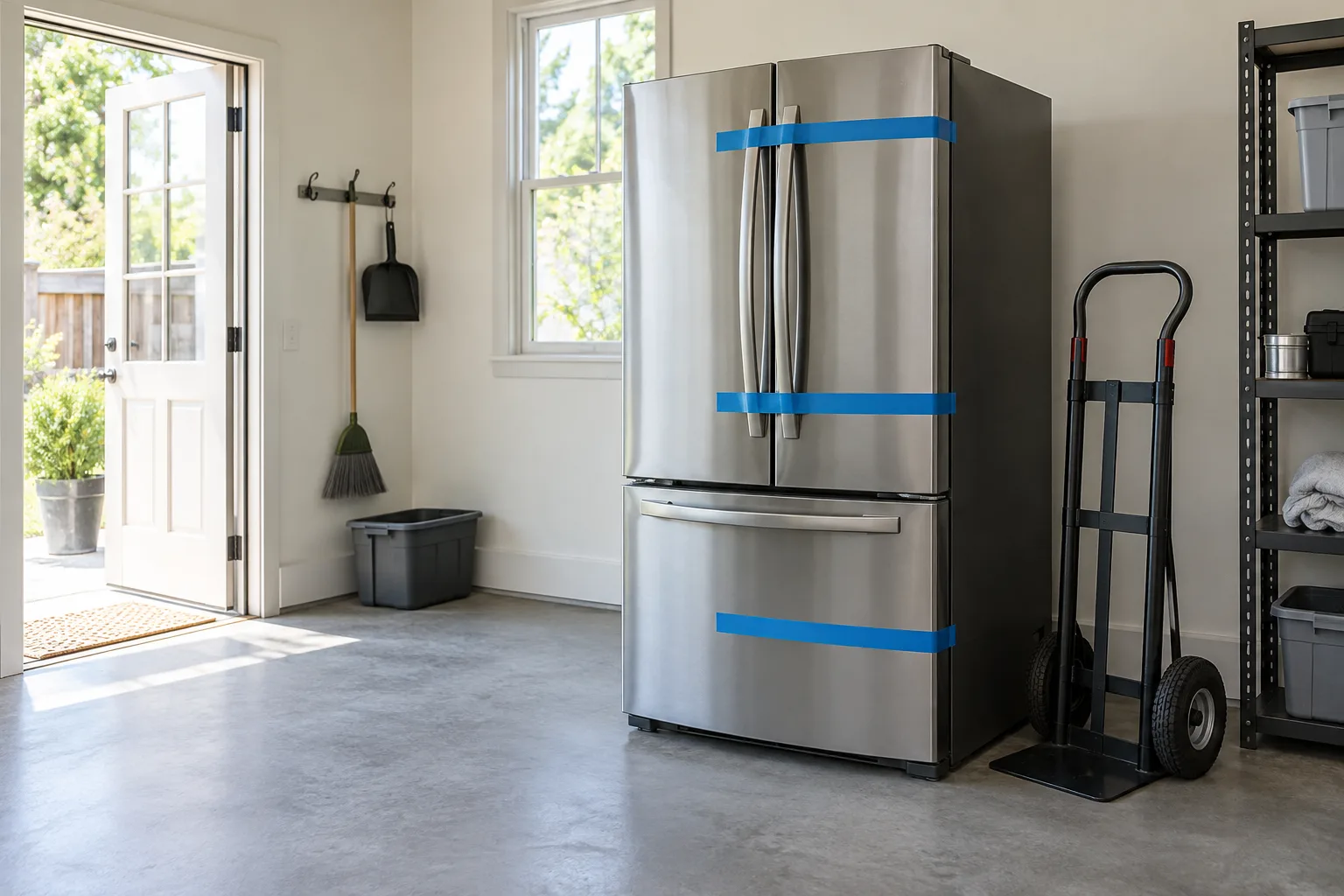
Empty the refrigerator, unplug it with enough time to defrost, contain meltwater, secure loose shelves, measure the route, and leave the sealed cooling system alone. Do not cut refrigerant lines, remove the compressor, or vent the appliance.
This preparation guide applies broadly in the United States; pickup programs and utility rebates are address-specific. Check the City of Los Angeles, local utility, retailer, or recycler for the actual destination.
A low-stress preparation timeline
| When | Task | Why it helps |
|---|---|---|
| Several days before | Confirm who will collect it and whether the unit must work | Utility, retailer, city, and private programs have different eligibility rules. |
| 24–48 hours before, or as the manufacturer directs | Remove food, unplug, and defrost | Reduces water, odor, and mess during the carry. |
| After defrosting | Dry the interior and secure removable shelves and drawers | Stops loose parts from shifting or breaking. |
| Before arrival | Measure doors, turns, stairs, elevator, and dolly clearance | Reveals whether doors or handles need qualified removal. |
| Pickup day | Clear the route and keep children and pets away | Gives the crew a controlled path. |
Do not dismantle the cooling system
EPA rules require refrigerant to be recovered before final disposal of refrigeration and air-conditioning equipment. For appliances that enter the waste stream with the refrigerant charge intact, the final party in the disposal chain is responsible for ensuring recovery. If refrigerant was removed earlier, the final disposer must keep the required signed statement.
EPA’s consumer guidance says appliance owners should check utility turn-in programs, retailers, municipalities, and recyclers. It also explains that almost all refrigerator and freezer materials can be recycled after refrigerant and hazardous components are managed. Review the EPA Appliance Disposal page and safe-disposal requirements. Sources checked September 23, 2026; United States federal requirements.
Pickup-day checklist
- The collector and appointment are confirmed.
- Food, ice, and personal items are removed.
- The unit is defrosted and dry.
- Shelves, drawers, cords, and doors are secured for the planned move.
- The path, doorway, stairs, and loading area have been measured.
- No refrigerant line, compressor, or sealed cooling component has been cut or opened.
Questions to ask the collector
- Do you accept this appliance type and size?
- Must it be working, unplugged, or fully defrosted?
- Will you carry it from inside, and does stair access change the quote?
- How does the appliance reach a party that meets refrigerant-recovery requirements?
- Do doors or handles need to be removed, and who is qualified to do that?
For help with the carry and hauling, see refrigerator removal planning. If a utility or retailer program accepts the unit, compare that option before paying for private service.